

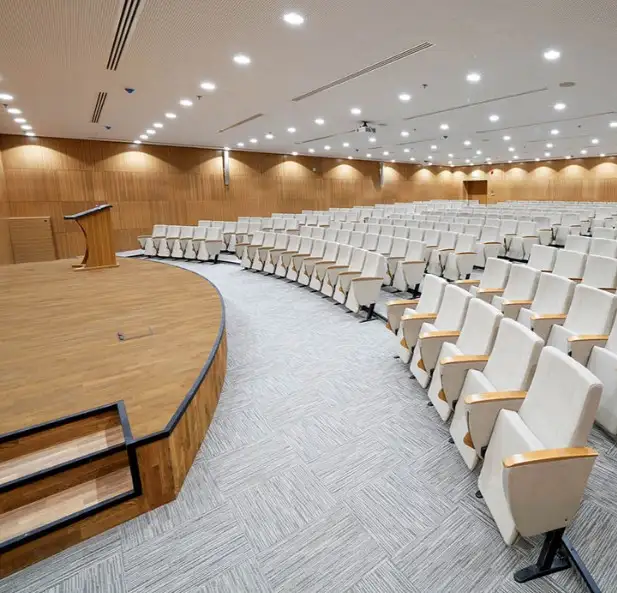
Conference Seat Solutions for Modern Halls
Meetings Need Comfort
A conference seat has a quiet but decisive role in every meeting space. People may come to a hall for a keynote, a seminar, a training session, a lecture, a public meeting or a formal ceremony, but their attention is shaped by how comfortably they can sit, listen, write and follow the event. If the seating is uncomfortable, too narrow, noisy or poorly arranged, the quality of the whole room becomes weaker.
Conference seating is different from ordinary furniture because it must support focus. A conference hall is not a lounge, but it should not feel rigid or tiring either. The seat must create a balanced posture, provide enough personal space, allow clear sightlines and remain durable under repeated use. This balance is especially important in venues used for long sessions, multiple events and different audience groups.
For European and international projects, conference seats should be planned with the full room in mind. Stage position, screen height, floor slope, row spacing, writing tablet needs, acoustic conditions, lighting, cleaning routines and installation details all influence the correct product choice. A seat that looks suitable in a catalogue may not perform well if the room layout is not compatible.
The Seat as a Focus Tool
In a conference room, the seat should help people pay attention. A poorly designed seat makes users shift constantly, lean forward, lose posture or become tired before the event ends. A well-designed conference seat supports the body naturally and lets the audience concentrate on the speaker.
This does not mean the seat should be overly soft. Too much softness can reduce posture support and make the user feel passive. Too much hardness can create discomfort during long sessions. The best conference seat provides controlled comfort: stable, supportive and suitable for hours of use.
Focus begins with physical comfort. When the body is supported correctly, the mind can stay with the presentation.
Reading the Room Before Choosing the Model
The correct conference seat depends on the room’s real purpose. A corporate presentation hall, a university lecture room, a municipal auditorium and a cultural center do not need the same seating details.
A lecture hall may need writing tablets. A formal auditorium may need elegant upholstery and wooden armrests. A training room may need durable, practical seating that can handle daily use. A multipurpose hall may need a balanced model that works for speeches, ceremonies, seminars and cultural events.
Before selecting a model, the project team should understand how the space will be used most often. The wrong seat can reduce comfort, capacity and long-term value.
Writing Tablets and Real Usability
Writing tablets can make a conference seat much more functional, but only if they are properly designed. A tablet that is too small, unstable or difficult to open can frustrate users and weaken the purpose of the room.
In seminar halls, lecture spaces and training centers, writing tablets should provide enough surface for notes, documents or a tablet device. The position should feel natural, not forced. The opening and closing movement should be smooth and reliable.
Anti-panic tablet systems can be useful in rooms where users need to stand up and leave the row easily. They help reduce obstruction and improve row movement, especially in halls with limited spacing.
Row Spacing Is Not Only a Measurement
Row spacing affects comfort, safety, movement and capacity. A hall with narrow rows may look efficient on paper, but it can feel uncomfortable in real use. People need space to sit, stand, pass through the row and use writing tablets where necessary.
Conference seats with writing tablets usually need more planning than standard folding seats. VIP or executive areas may also require wider spacing. In stepped halls, floor geometry and row distance must be checked before the final model is selected.
A successful layout protects both capacity and comfort. The goal is not simply to install more seats, but to create a room that works smoothly during real events.
The Role of Sightlines
A conference seat must allow the user to see the speaker, stage, screen or presentation area clearly. If users must lean, turn or look over other people’s heads, attention drops quickly.
Sightlines are affected by floor slope, screen height, row distance, backrest shape and seat positioning. In renovation projects, existing floor levels may limit the choice of model. In new projects, seating should be considered early so that the architecture supports the audience experience.
A good conference hall gives every row a fair view, not only the front and center positions.
Upholstery and the Character of the Hall
Upholstery is not just a decorative decision. It affects comfort, maintenance, acoustic feel and the visual identity of the room. Fabric can create a warmer and softer atmosphere. Artificial leather can be practical in spaces where cleaning is a priority. More refined materials may be selected for executive halls or VIP sections.
Color also changes the room’s character. Anthracite, navy, black, dark grey, burgundy and deep brown can create a formal atmosphere. Softer neutral tones may suit modern corporate interiors. The selected material should resist wear, keep its color and remain suitable for regular cleaning.
A beautiful fabric that wears quickly is not a good long-term choice.
Silent Movement Matters
In a conference hall, even small noises can become distracting. A folding seat pan that closes loudly, a loose armrest or a noisy writing tablet mechanism can interrupt the atmosphere of a presentation.
Silent movement is a sign of manufacturing quality and correct installation. Mechanisms should feel controlled, not weak or unstable. This is especially important in auditoriums, seminar rooms and formal meeting spaces where people enter, leave and adjust their seating during an event.
A professional conference seat should support the room quietly.
Armrests, Personal Space and Room Discipline
Armrests do more than provide comfort. They define personal boundaries between users and help the seating layout feel organized. In large conference halls, consistent armrest alignment also contributes to the visual order of the room.
Wooden armrests can create a warmer and more prestigious appearance. Plastic armrests may offer practical durability. Upholstered armrests can provide softer comfort in selected areas. The correct choice depends on the hall’s use, design level and maintenance expectations.
Weak or poorly aligned armrests can make even a new room look badly finished.
Public Venues Need Stronger Seating
Conference seats in public venues face different conditions from private meeting rooms. Municipal halls, universities, cultural centers and training facilities may be used frequently by different groups. The seating must handle heavy use, cleaning cycles and long-term public traffic.
In these projects, durability is not optional. Upholstery, foam, frame structure, mechanisms and mounting points must be selected for repeated use. Maintenance-friendly details can reduce operational pressure and keep the room looking professional for longer.
A public hall needs seating that is comfortable on event day and reliable after years of service.
Renovating a Conference Hall
Replacing old conference seats can quickly improve the image of a hall. Worn upholstery, collapsed foam, noisy mechanisms or outdated colors can make a venue feel tired, even if the rest of the room is still functional.
A renovation should begin with technical review. Existing row spacing, floor slope, mounting points, stage position, screen visibility and capacity goals should be checked. The new seat should fit the room without creating unnecessary construction work.
A seating renovation can also be an opportunity to add writing tablets, improve numbering, create VIP rows or update the hall’s visual identity.
New Conference Projects
In new conference projects, seating should be planned early. The choice of seat can affect floor design, aisle planning, acoustic treatment, lighting, screen visibility and capacity.
If the seating is selected too late, the room may not support the preferred model. Writing tablet seats may need more space. Auditorium-style seats may require specific mounting conditions. Executive halls may need a different spacing strategy.
Early coordination helps protect comfort, budget and long-term usability.
Acoustic Relationship
Conference seating contributes to the acoustic behavior of the room. Upholstery, foam, seat density, flooring, wall panels and ceiling surfaces all influence how speech is heard.
In speech-focused rooms, clarity is essential. Too much echo can make words overlap and tire the audience. Upholstered seats and acoustic panels can help create a more controlled environment when planned together.
A good conference hall should not only look professional. It should allow people to hear clearly without effort.
Manufacturer-Based Project Control
Working with a manufacturer gives project teams more control over the final result. Seat dimensions, upholstery, colors, foam structure, armrests, writing tablets, mechanisms, numbering and mounting details can be evaluated according to the project.
This is especially important when many seats must match in comfort, color, function and finish. Consistency across a large hall is a major part of perceived quality.
A manufacturer-based approach also allows different seating needs to be solved within one project, such as standard rows, VIP sections, seminar seating and auditorium configurations.
Conference Seat Categories
Professional conference projects may include standard conference seats, auditorium seats, seminar seats, lecture hall seats, writing tablet seats, anti-panic tablet models, folding seats, upholstered seats, wooden detail seats, plastic outer back models and VIP conference seats.
Each category serves a different function. The right selection depends on room type, session length, writing needs, usage frequency, maintenance routine, design target and budget.
Quality and Price Balance
Conference seats should not be selected only by the lowest price. A cheaper seat can become expensive if it creates early upholstery wear, foam collapse, mechanism noise, loose armrests or replacement needs.
The correct approach is to compare price with durability, comfort, maintenance and project suitability. A strong quality-price balance protects the room’s appearance and improves the user experience over time.
In conference projects, the seat is not just a cost item. It is part of how the audience listens, learns and remembers the venue.
Conclusion
Conference seats shape the quality of meetings, seminars, lectures and public events. The right seat supports focus, comfort, clear sightlines, quiet movement, efficient room management and long-term durability.
A successful conference seating project requires careful room analysis, ergonomic comfort, suitable upholstery, stable mechanisms, correct row spacing, practical maintenance and a strong balance between quality and price. When seating is selected according to the real conditions of the hall, the result is a more focused, more professional and more valuable meeting environment.
For professional conference seat solutions, visit the official website.
Created By : Monseat